

Mercedes CLK500 Voltage Regulator Parts
Showing 1 out of 1 part(s) found in our catalog.
Brand
Keyword
Subcategory
Mon-Fri 8-4 MST/PST (Arizona Time)

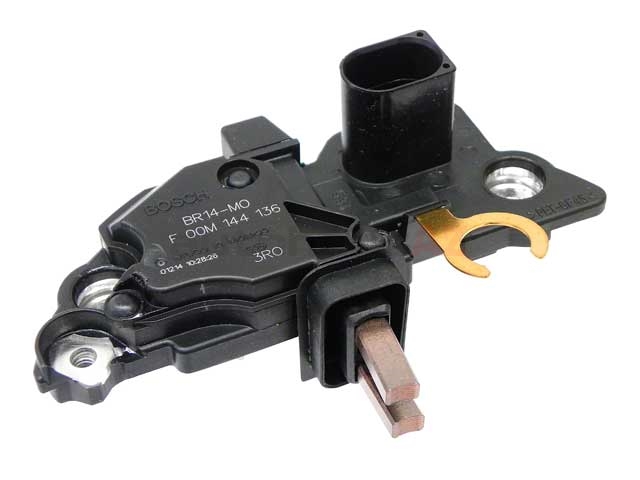


Based on industry averages you can expect to pay between $28.99 and $28.99 for a Mercedes CLK500 voltage regulator.
What Are The Common Symptoms Of A Failing Mercedes CLK500 Voltage Regulator?
If your Mercedes CLK500 voltage regulator is on its way out, you might come across some odd electrical quirks. One day your headlights flicker, the next the dash lights dance around for no reason, or your power seats stop working right. Sometimes the radio resets itself. The car may not want to start in the morning, even though it was fine yesterday. You turn the key, and nothing—except maybe a faint clicking. A weak battery can fool you too, since charging issues often go hand in hand. Some drivers catch an odd whining or buzzing under the hood as the alternator strains. At first, it's easy to blame the battery, but when the weird electrical stuff doesn’t go away, all signs point toward a failing Mercedes CLK500 voltage regulator.
How Can I Diagnose A Bad Mercedes CLK500 Voltage Regulator?
To spot a bad Mercedes CLK500 voltage regulator, grab a multimeter and check the voltage at the battery while the engine’s running. Healthy numbers usually hover around 13 to 14.5 volts. If you see less than 13, the system isn’t charging enough. If it bounces over 15 volts, that’s trouble too—could fry the battery. People often check the regulator itself by pulling it off the back of the alternator; burnt marks or short brushes give up the culprit fast. Sometimes, just watching the dash lights or headlights pulse in rhythm with the engine is enough to make you suspicious. Swapping in a new regulator is still the simplest fix once voltage readings get out of line.
Is It Possible To Replace The Mercedes CLK500 Voltage Regulator Separately?
You can swap out the Mercedes CLK500 voltage regulator without buying a new alternator. It’s bolted to the back, and for those handy with a wrench, the job is manageable in a garage. But some skip the hassle and pull the whole alternator for easier access, since the fit can be tight. It helps to get the correct replacement that matches the OEM spec, because small differences cause big headaches later. If you’re already under the hood, check the alternator brushes. Worn brushes can look fine at first but often quit at the worst time, so changing both parts in one go is common sense.
What Causes The Mercedes CLK500 Voltage Regulator To Fail Prematurely?
Why does the Mercedes CLK500 voltage regulator fail sooner than expected? The answer is usually heat. High engine temps wear down delicate parts inside. Sometimes, loose battery cables or corroded grounds draw too much current through the regulator. Extra gadgets like big stereos or light kits, especially without proper wiring, push the part too far. Jump-starting gone wrong fries circuits in a blink. Time plays a role too—eventually, electrical bits just break down no matter how well you drive. Keeping the electrical connections tidy and the car serviced gives the regulator a fighting chance.
What Are The Risks Of Driving With A Faulty Mercedes CLK500 Voltage Regulator?
Driving with a bad Mercedes CLK500 voltage regulator is rolling the dice. Low voltage means your battery dies out of the blue, you get stranded, or the engine stalls in traffic. Too much voltage, and the battery swells up, leaks, or even bursts—plus other electronics in the car could get cooked. Modern cars depend on steady voltage for everything from fuel injectors to the touchscreen. Letting the regulator issue drag out can turn a hundred-dollar fix into a thousand-dollar headache. Most find it’s not worth putting off.
Where Can You Find Affordable Mercedes CLK500 Voltage Regulators?
If your CLK500 needs a voltage regulator and you're looking to save, AutohausAZ is a good place to start. They keep prices low, move fast on shipping, and don’t make returns a chore. It helps when you know you’ll get the right part, and if there’s an issue, the process is simple. When the voltage starts acting up, you want the fix to be quick and easy—that’s what you’ll find here.